Quick answer
In short
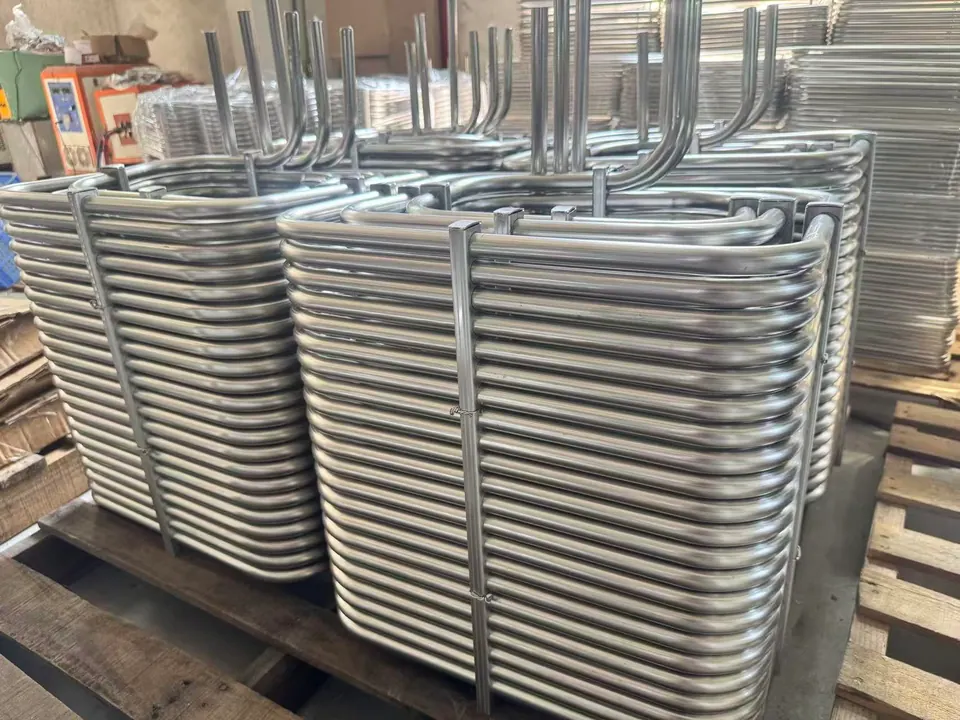
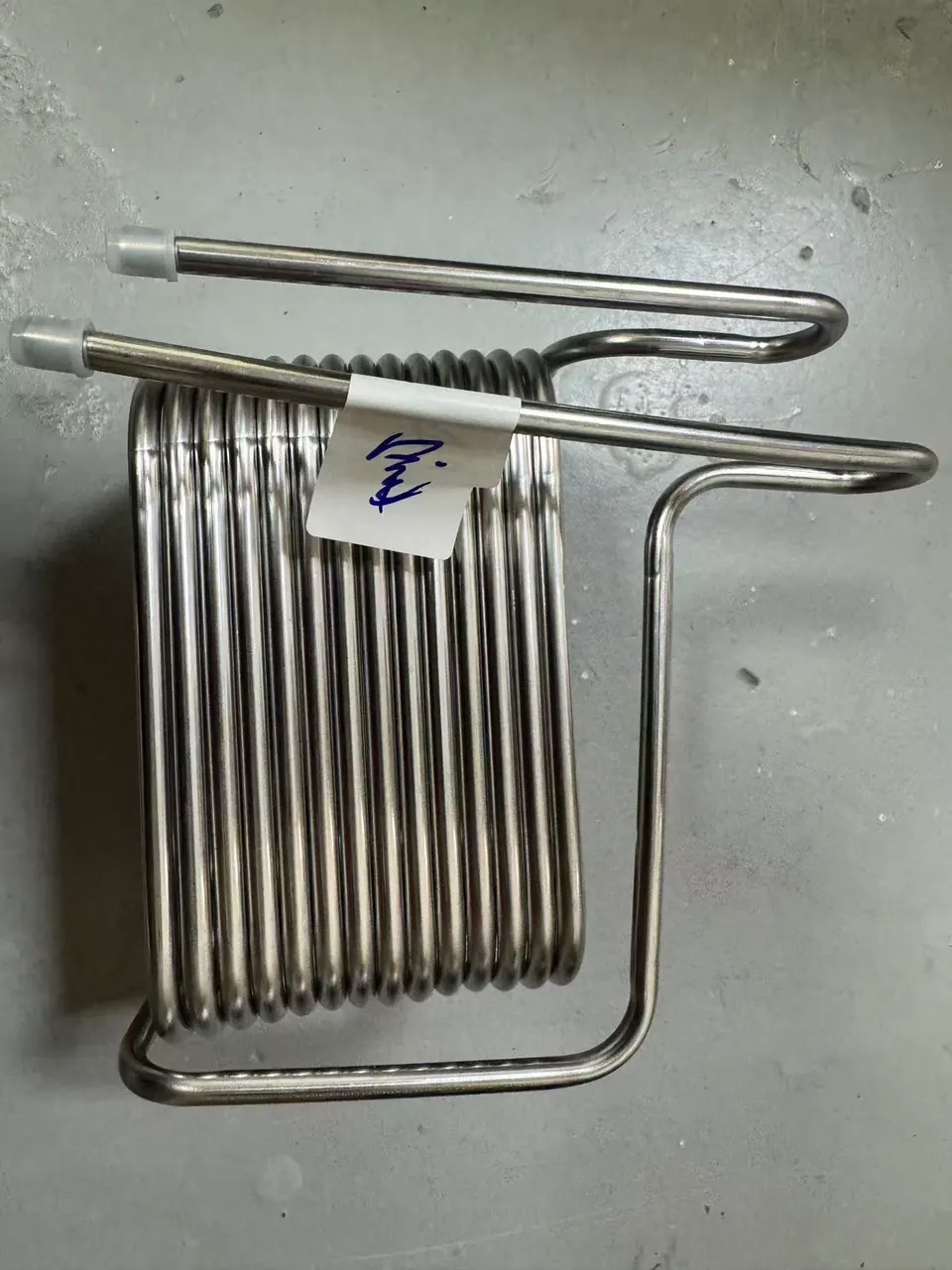
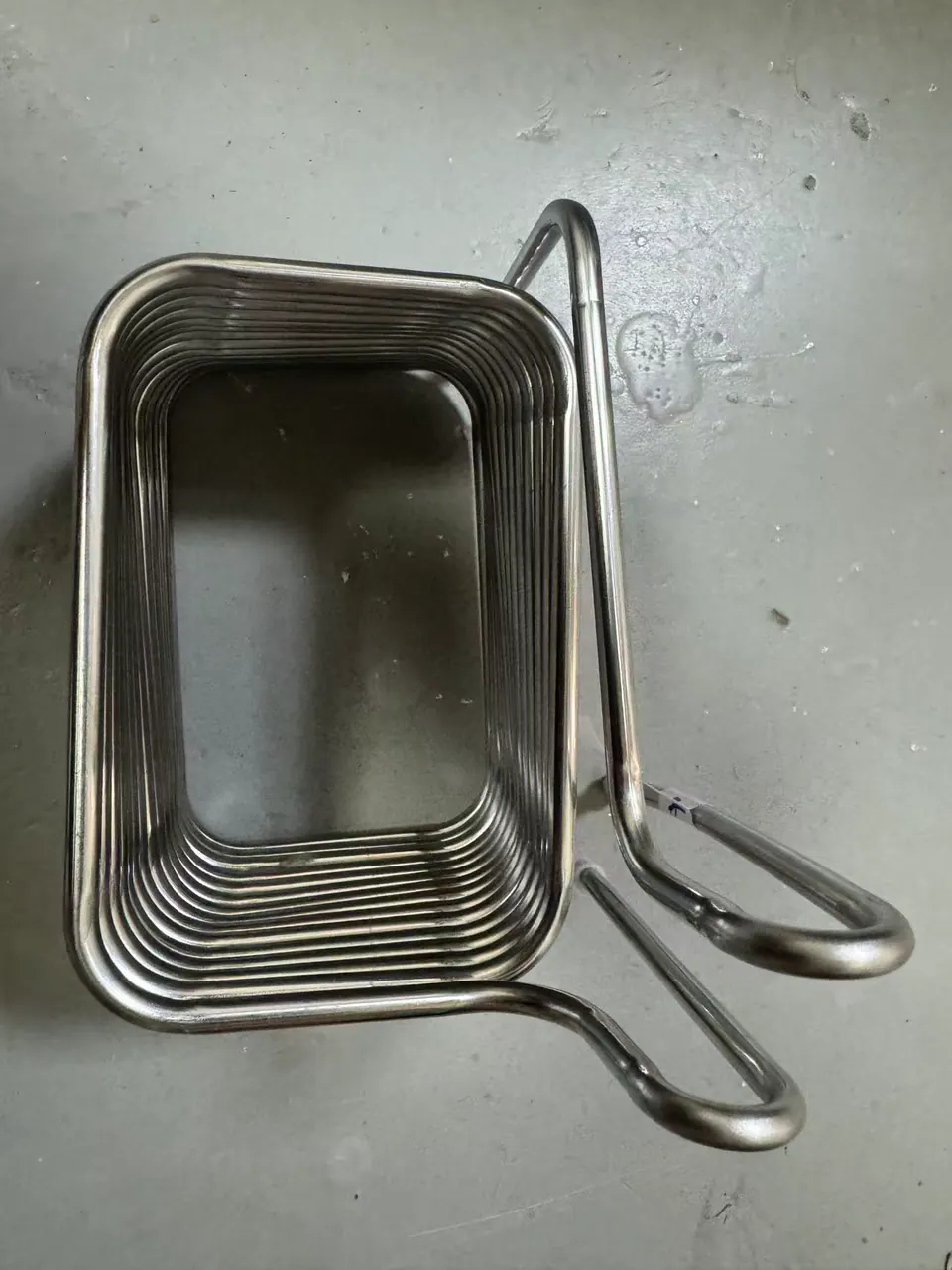
A rectangular coil is a tube wound into stacked rounded-rectangle turns, like a helical coil with a rectangular footprint. It is defined by its outside length and width, the corner radius, the pitch between turns, the number of turns or overall height, the tube size and the connection legs. It suits rectangular tanks and baths, where a round coil would leave the corners unused. Uniinox forms rectangular coils in stainless steel or copper tube to the customer's drawing; the photos on this page show stainless rectangular coils from production.
Dimensions to specify
Mark these dimensions on a sketch or drawing. Say which ones control the fit and which are only for reference.
| Symbol | Dimension | Notes |
|---|---|---|
| L × W | Outside length × width | Measured over the outside of the tube |
| R | Corner radius | State whether it is inside, centreline or outside |
| H | Overall coil height | State whether the legs are included |
| P | Pitch | Centre-to-centre distance between turns |
| d × t | Tube outside diameter × wall | For example Ø22 × 1.0 mm |
| — | Legs and supports | Where both ends leave and how the coil is held |
Why choose a rectangular coil
In a rectangular tank, a round coil can only be as wide as the shorter side and leaves the corners empty. A rectangular coil follows the tank walls, so more tube fits in the same height and the gap to the wall stays even on all sides.
Related: Tank heating and cooling coils
Corner radius
Tighter corners fill more of the space but are harder to form without flattening the tube. The smallest radius depends on the tube diameter, wall and material and is confirmed against the drawing. Say whether the radius on your drawing is measured to the inside, centreline or outside of the tube.
Pitch, legs and supports
As with a helical coil, the pitch must be larger than the tube outside diameter if the turns must not touch. Show where both legs leave the coil, their length and end type, and any supports or brackets that hold the coil in the tank.
Tube length
L ≈ N × √(C² + P²) + legs, with C = 2 × (L − d + W − d) − 8R + 2πR
C is the centreline length of one rounded-rectangle turn, using the centreline corner radius R. The result is the coil length only; connection ends and forming allowances add to the tube that is cut.
Production and catalog photos
What to send for a quotation
A dimensioned sketch is enough to start. Photos of the space or of an existing coil help if you do not have a drawing.
- Outside length and width, corner radius, height and pitch or number of turns
- Tube material, outside diameter and wall thickness
- Working medium inside the tube and the liquid or air outside it
- Operating temperatures and pressure, and any test requirement
- Connection ends, direction and length of the legs, and supports
- Quantity and any packing or cleanliness requirement
Frequently asked questions
Questions about rectangular coils
When should I choose a rectangular coil instead of a helical coil?
When the tank or bath is rectangular. A rectangular coil follows the walls and uses the corners, so more tube fits in the same height than with a round coil.
How tight can the corners of a rectangular coil be?
It depends on the tube outside diameter, wall and material. Give the radius you need on the drawing and it is confirmed during the drawing review.
How do I estimate the tube length of a rectangular coil?
Work out the centreline length of one turn, C = 2 × (L − d + W − d) − 8R + 2πR, then multiply √(C² + P²) by the number of turns and add the legs.