Product family / 05
Immersion heating and cooling coils
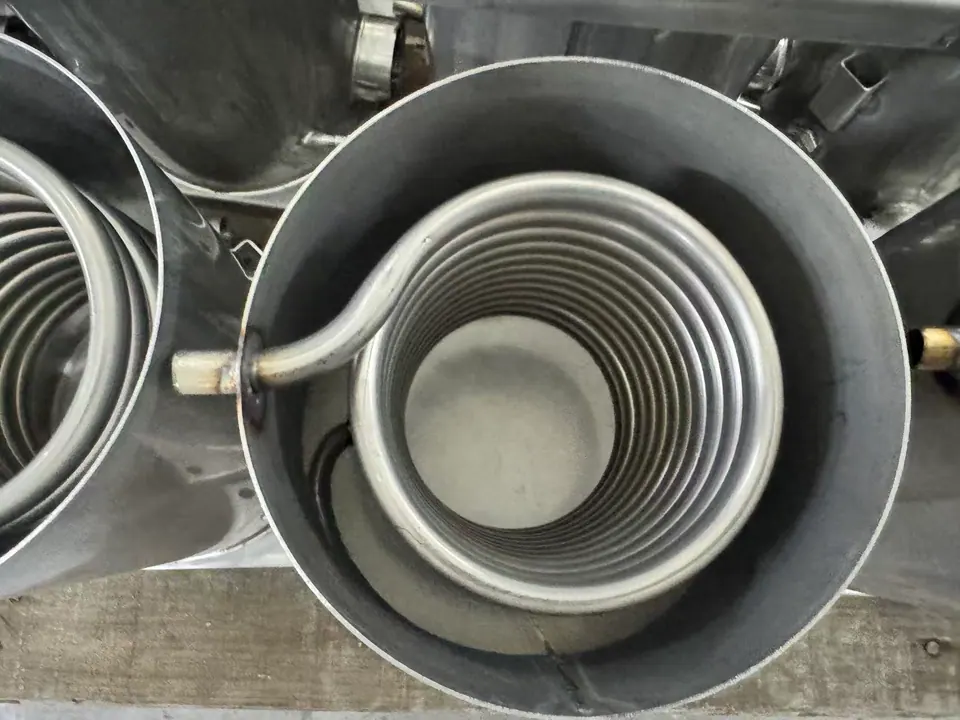
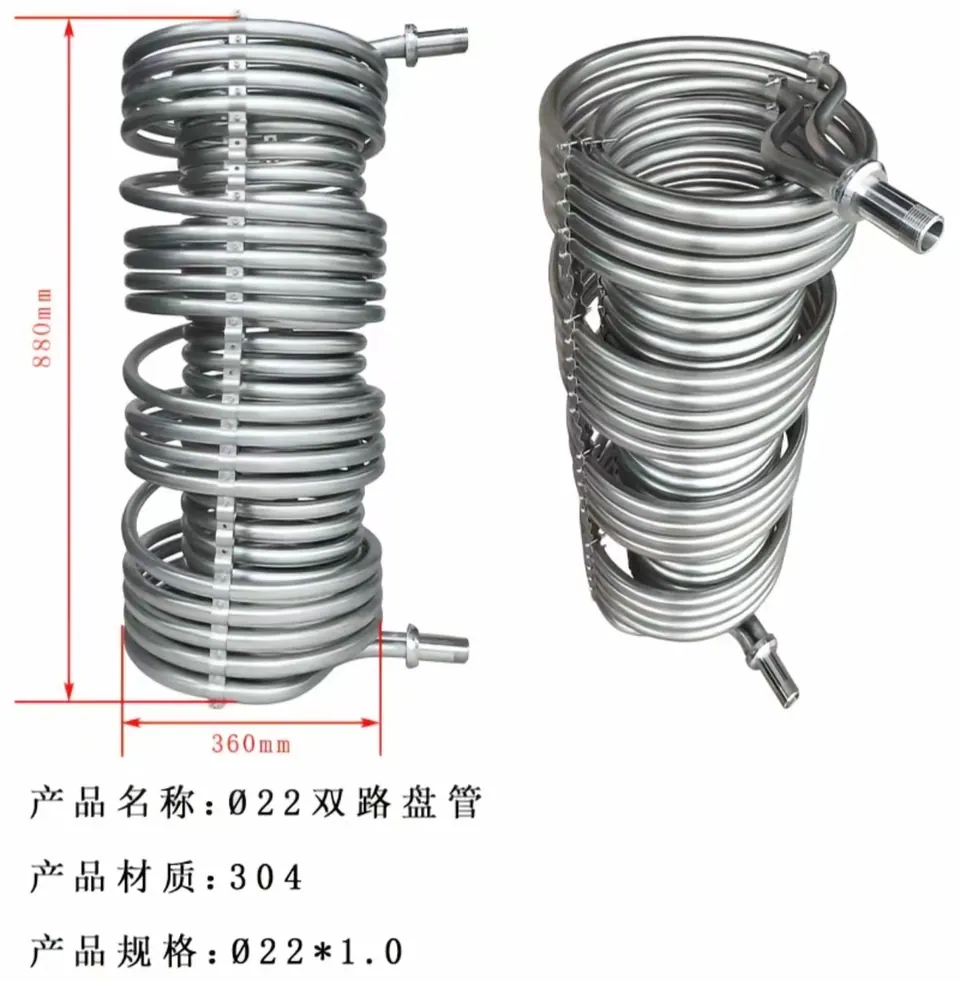
Uniinox forms immersion coils around the available tank envelope, required connection direction and approved tube route. The supplied catalog provides 304 stainless reference geometries; final material, dimensions, working medium, pressure, temperature and mounting details remain project-defined.
Quick answer
How should this product be specified?
An immersion heat exchanger coil transfers heat between the fluid inside the tube and the liquid surrounding the coil. A useful quotation needs both the thermal operating point and the tank interface, because a coil that fits the vessel is not automatically suitable for the required heating or cooling duty.
Documented scope
A clear starting point, with final details controlled by the drawing.
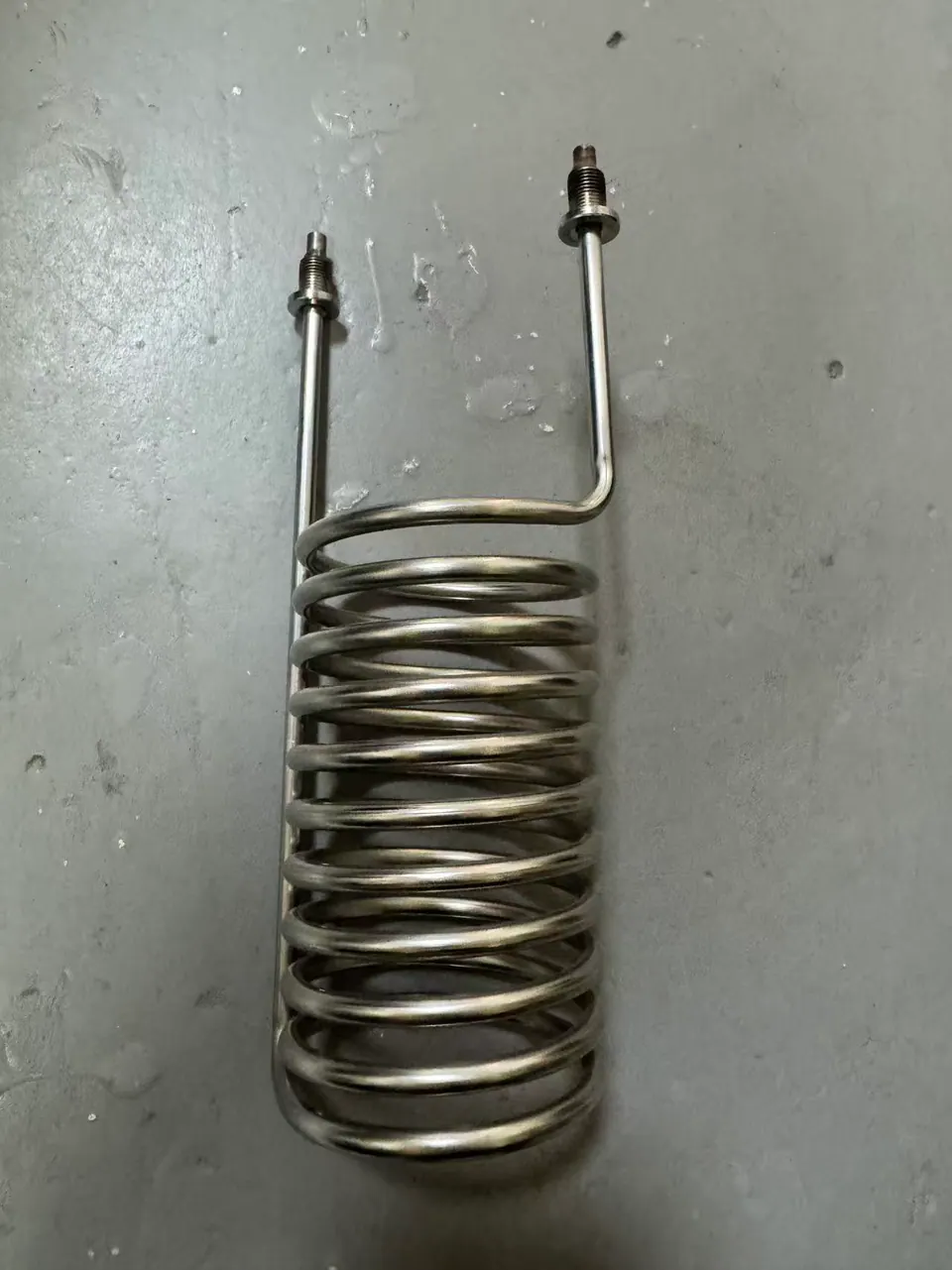
- Helical, compact and top-connection reference layouts
- Tube route and connection position made to drawing
- Heating or cooling service reviewed from operating inputs
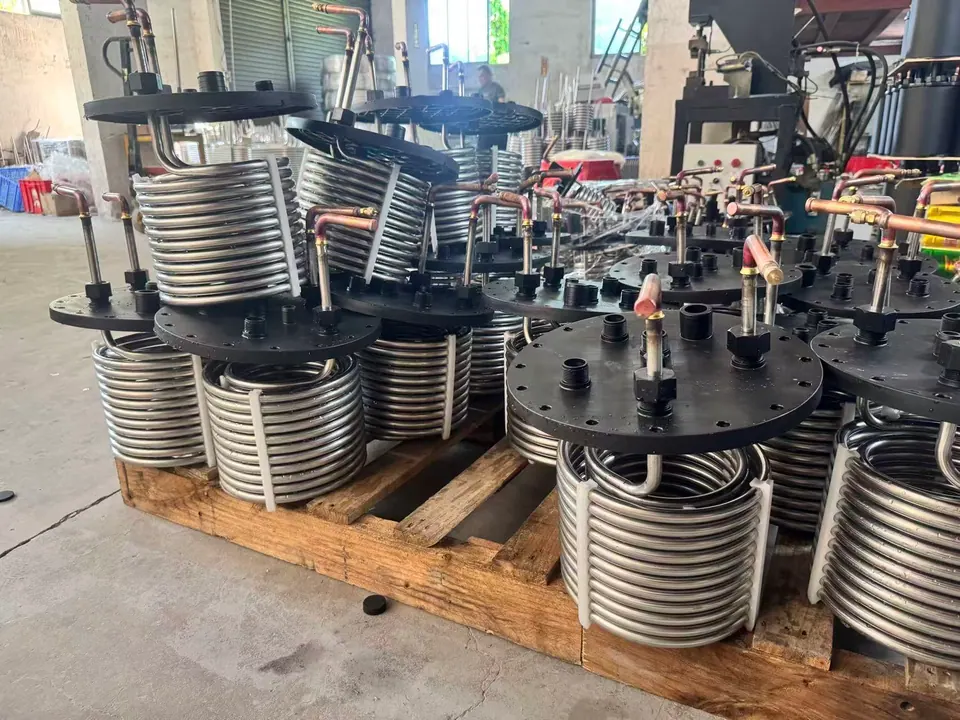
Evidence source: Immersion coil geometries and vessel integration shown in the supplied catalog and factory photography.
Selection and project scope
Check the submerged service and installation route together
Unlike a bare formed helical coil enquiry, an immersion-coil enquiry must define the liquid surrounding the tube as well as the fluid inside it. State whether the tank operates in batches or continuously, the normal liquid level and the required heating or cooling duty. Include both media, inlet and outlet conditions, pressure and flow where known; geometry alone does not establish performance.
Show the tank dimensions, access opening, immersion depth, nearby obstructions, supports and connection exits. Identify how the finished coil will be inserted and removed for inspection or cleaning. If the tank liquid or cleaning chemicals may affect material choice, provide their composition and temperature for a project-specific review rather than assuming a stainless grade from a catalog example.
Specify whether the requested supply is only the immersed coil or also a mounting plate, vessel section or connection header. The stainless helical route is useful for tube and formed geometry; the integrated-assembly route covers additional tank and header interfaces. Final material, capacity and test scope remain subject to the approved project basis.
View the custom coils catalogSelection checklist
Information needed to review an immersion coil
Provide normal operating conditions and any separate design limits with units. Final material, wall and construction remain subject to the approved project basis.
| Input | What to provide | Why it matters |
|---|---|---|
| Tank interface | Internal envelope, access opening, immersion depth, obstructions and removal route | Confirms that the coil can be installed, operated and removed as intended |
| Process and coil-side media | Fluid identity, concentration where relevant, cleanliness and cleaning method | Supports material and maintenance review without assuming compatibility |
| Thermal operating point | Required duty, inlet and outlet temperatures, flow rate and expected batch or continuous operation | Defines the heating or cooling task rather than selecting by dimensions alone |
| Mechanical basis | Operating and design pressure and temperature, tube OD, wall and requested material | Provides the inputs needed for project-specific engineering review |
| Connections and scope | Connection size, type and orientation, supports, testing, quantity and documentation | Clarifies the vessel interface and quotation boundary |
Buyer questions
Before you request a quotation
What information is needed for an immersion coil inquiry?
Provide the tank opening and internal dimensions, immersion depth, mounting arrangement, process liquid and coil-side fluid. Include temperatures, required duty and connection locations for a project-specific review.
Can I choose an immersion coil only by its outside dimensions?
Dimensions establish whether it fits, but not whether it is suitable for the process. Material compatibility, operating conditions and the required heating or cooling duty also need review.
RFQ checklist
Include these inputs for a useful review.
- 01Tank or vessel envelope and installation opening
- 02Heating or cooling medium, inlet and outlet temperatures
- 03Tube material, outside diameter, wall and connection type
- 04Required duty, pressure, quantity and inspection scope