Product family / 01
Stainless helical coils
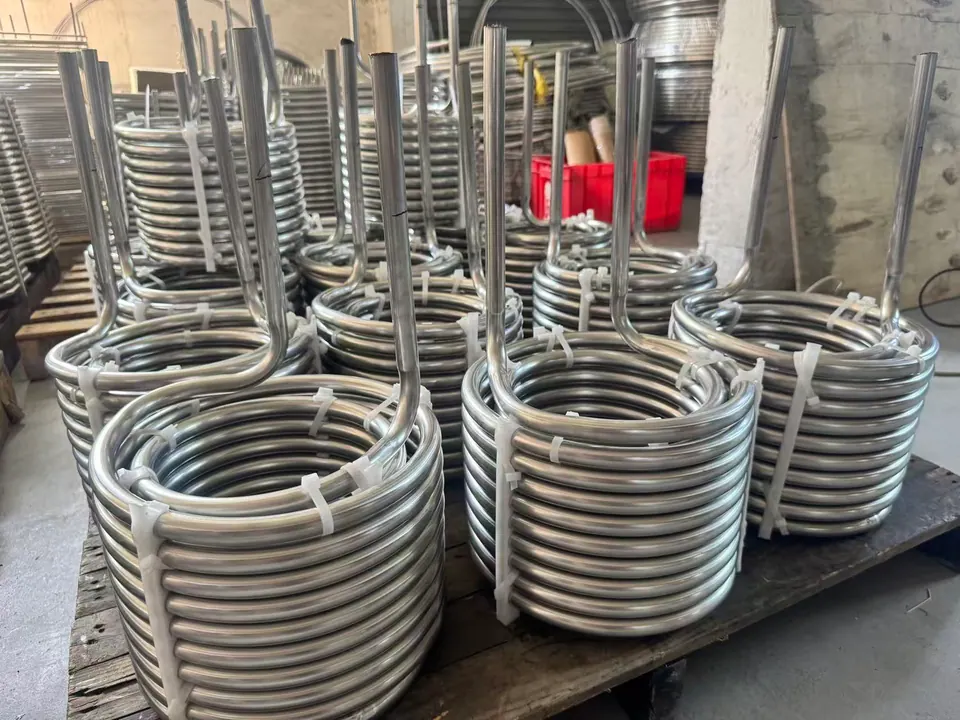
The supplied 2026 catalog documents nine reference geometries in 304 stainless steel. They are useful starting points for tanks and compact equipment, while final dimensions, connection ends and tolerances remain drawing-controlled.
Quick answer
How should this product be specified?
A stainless steel heat exchanger coil should be quoted from an agreed drawing and service basis, not from a photograph or outside diameter alone. Define the tube grade and dimensions, coil envelope, media, temperatures, pressure, duty, connections and inspection scope before production release.
Documented scope
A clear starting point, with final details controlled by the drawing.
- 304 stainless reference configurations
- Ø9.52, Ø12 and Ø22 mm catalog examples
- Single, dual, top-connection and tapered layouts
Evidence source: Reference configurations P01-P09 in the supplied 2026 catalog.
Selection and project scope
Choose the coil geometry before defining the connections
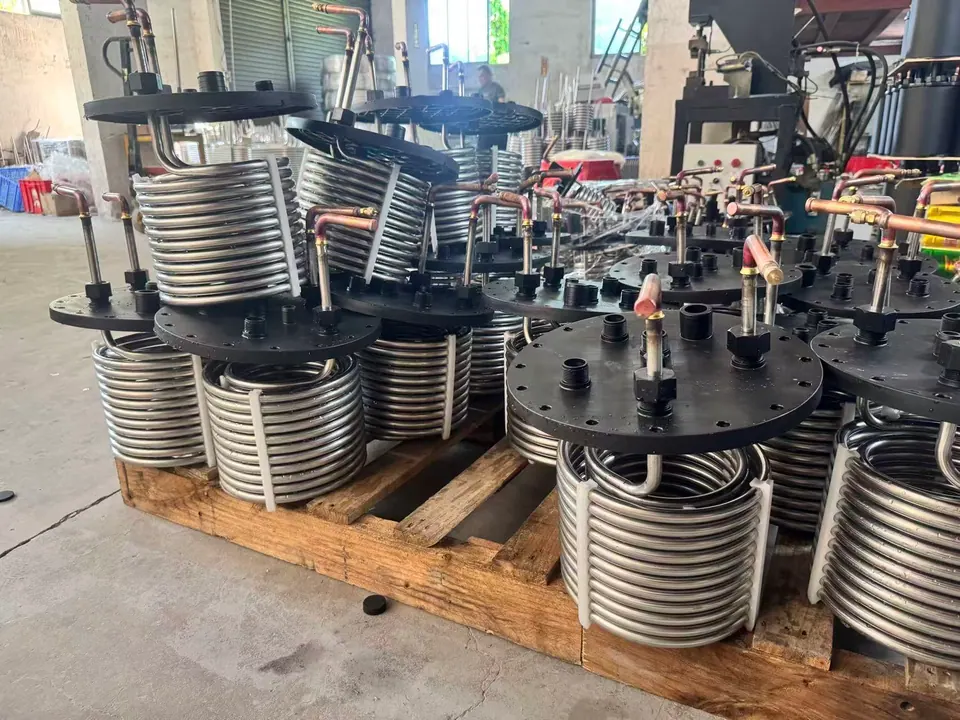
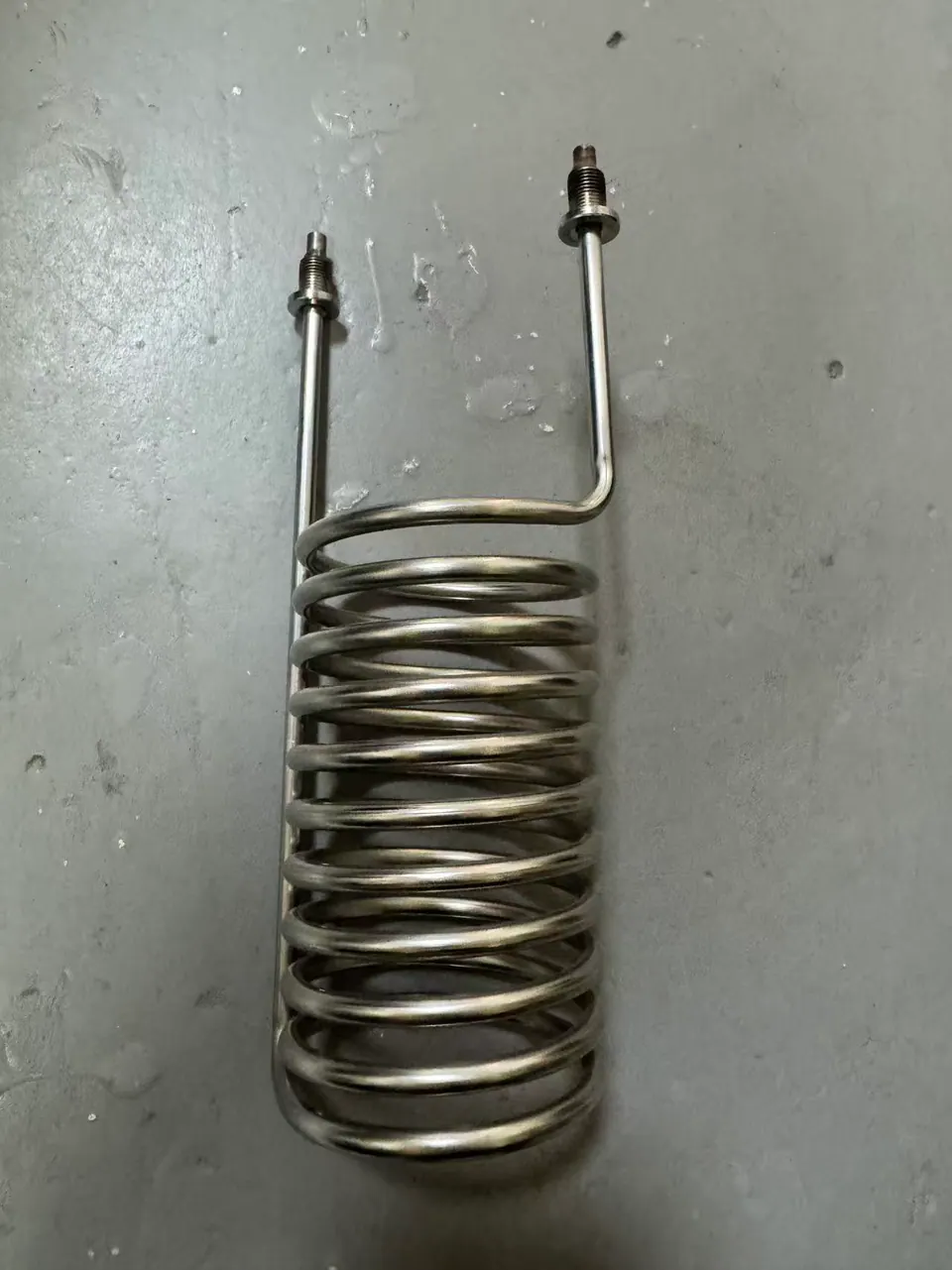
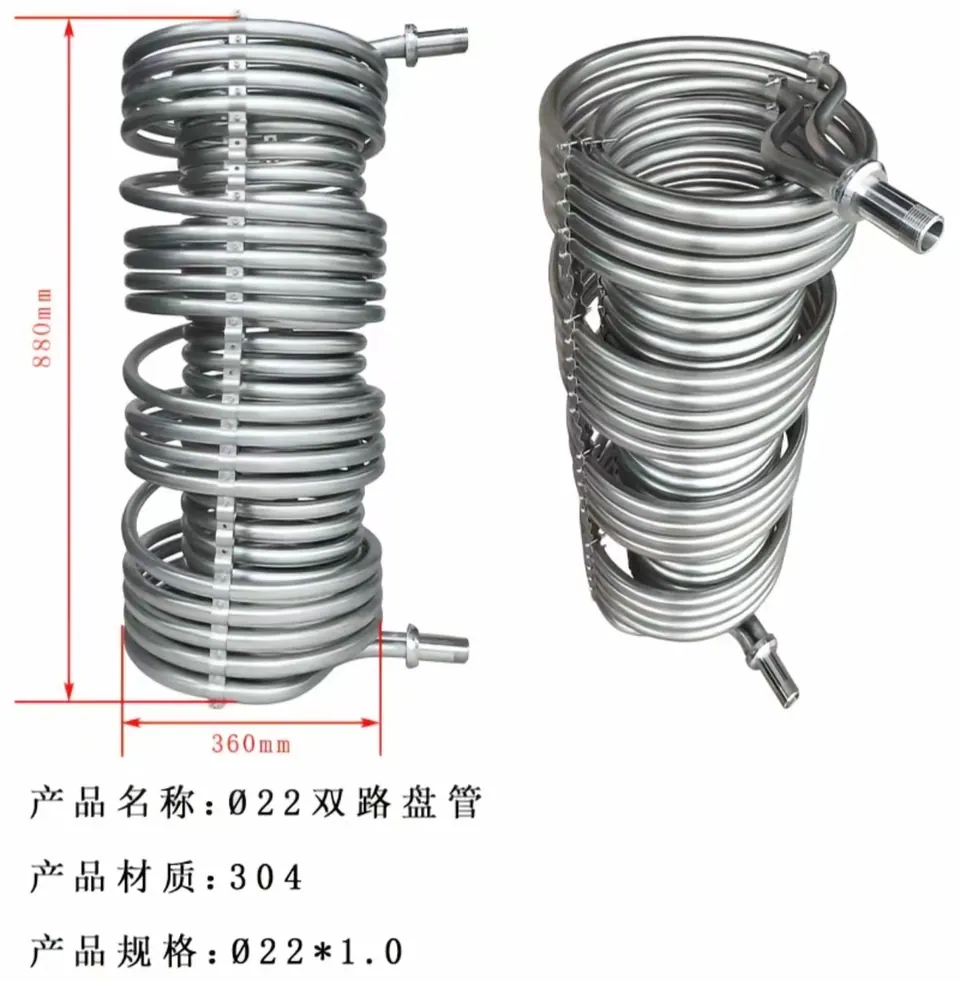
Start with the space available inside your equipment: the installation opening, overall coil diameter, height and clearance around the tube. The custom-coil catalog provides reference geometries for comparing single-circuit, dual-circuit, compact and tapered layouts. A reference size is a starting point for a drawing review, not a statement of heating or cooling capacity.
For a tank project, also describe how the coil will be supported, removed and connected outside the vessel. If your drawing specifies copper tubing, compare the copper tube coil route; if it includes the vessel and mounting interfaces, include those parts in an immersion-coil or OEM assembly enquiry.
View the custom coils catalogSelection checklist
Stainless coil inputs that belong on the same review
The geometry, service conditions and interfaces are connected. Keeping them in one controlled data set reduces assumptions during quotation and drawing approval.
| Input | What to provide | Why it matters |
|---|---|---|
| Tube definition | Material grade, outside diameter, wall thickness and applicable dimensional requirement | Sets the material and forming basis without treating a catalog example as a universal specification |
| Coil geometry | Overall diameter or width, height, pitch, turns, circuit count and straight-leg dimensions | Confirms whether the formed route fits the available envelope |
| Service basis | Media on both sides, temperatures, pressure and required heating or cooling duty | Separates physical fit from the project-specific performance review |
| Connections and support | End type, orientation, mounting points, supports and removal path | Aligns the coil with the vessel and installation interfaces |
| Release scope | Drawing revision, tolerances, inspection, documentation, quantity and packing | Defines what must be accepted before repeat production or shipment |
Buyer questions
Before you request a quotation
Can a stainless steel helical coil be quoted from a drawing?
Submit the drawing with tube outside diameter, wall thickness, coil diameter, height and connection details. Identify the required material grade and quantity. Catalog configurations are references; the quotation must identify the agreed drawing and material.
Does the coil photograph establish its pressure rating?
No. A photograph shows the arrangement, not a pressure or temperature rating. Include the operating conditions and required inspection documents in the inquiry so the proposed construction can be reviewed.
RFQ checklist
Include these inputs for a useful review.
- 01Tube outside diameter, wall and material grade
- 02Overall height, diameter or width and allowable tolerances
- 03Circuit arrangement, connection direction and end type
- 04Working medium, temperature, pressure and quantity