Product family / 08
Industrial evaporators
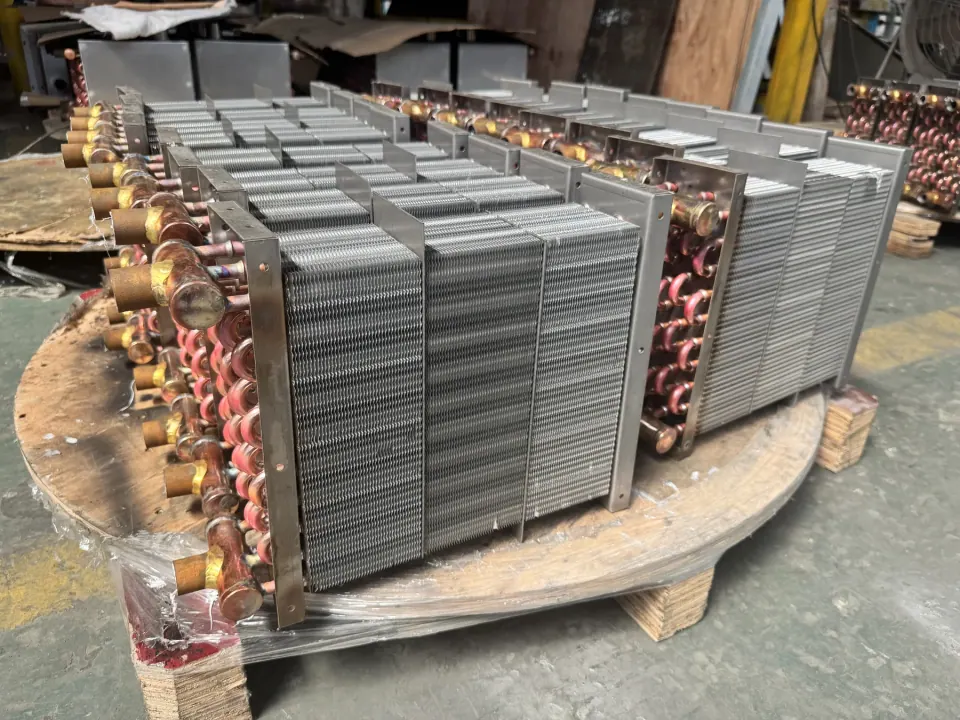
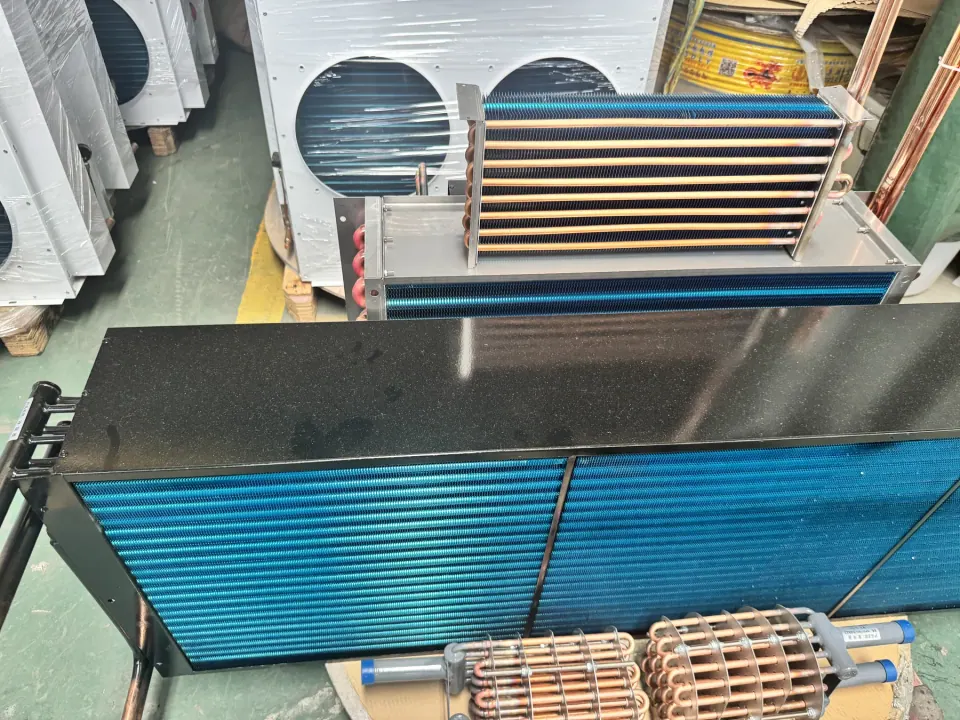
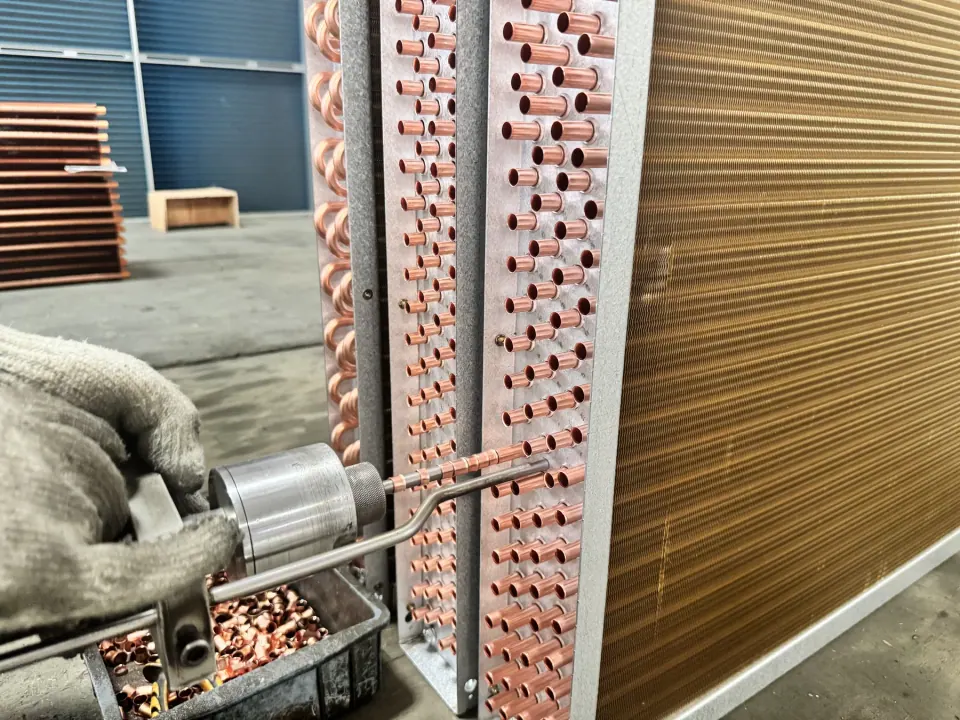
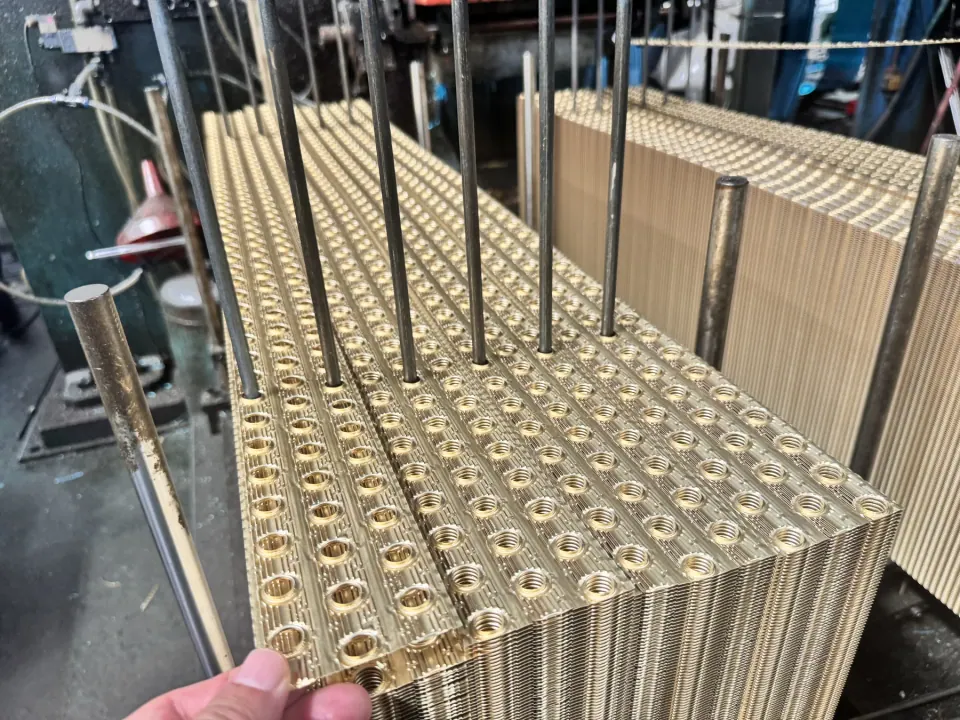
Evaporator geometry is reviewed against the required cooling duty, refrigerant, entering and leaving conditions, airflow, defrost or coating needs and installation space. Factory images show the component and assembly stages; the approved calculation basis and drawing control the supplied configuration.
Quick answer
How should this product be specified?
An industrial evaporator cannot be selected reliably from its photograph or overall size. The coil or assembly must be reviewed against the cooling duty, refrigerant or working fluid, entering and leaving conditions, airflow, allowable pressure drop, installation envelope and required defrost or drainage provisions.
Documented scope
A clear starting point, with final details controlled by the drawing.
- Compact or project-specific core envelopes
- Fin, tube, return bend and connection coordination
- Service conditions documented before quotation
Evidence source: Compact finned cores, fin preparation and coated assemblies documented in factory photography.
Selection and project scope
Describe the cooling duty and installation conditions
An evaporator enquiry should identify the refrigerant or working fluid, required cooling duty and the entering and leaving conditions. Include the air-side requirements, available space and connection orientation. Where relevant, describe condensate handling, access for cleaning and any defrost provisions required by the equipment design.
Distinguish the finned core from the surrounding casing, fans, controls and other equipment parts. Provide the assembly drawing if these belong in the same quotation. For a replacement project, a nameplate and photographs help identify the existing unit, while the drawing and agreed operating data define the requested replacement.
View the heat exchangers catalogSelection checklist
Industrial evaporator selection inputs
These inputs establish the quotation and calculation basis. They do not represent a published capacity or a universal configuration.
| Input | What to provide | Why it matters |
|---|---|---|
| Cooling duty | Required capacity and the normal and maximum operating points | Defines the load the evaporator is expected to absorb |
| Refrigerant or working fluid | Fluid identity, evaporating condition and available circuit information | Supports the refrigerant-side circuit and connection review |
| Air or process side | Airflow or flow rate, entering and leaving conditions and allowable pressure drop | Defines the second side of the heat-transfer duty |
| Installation envelope | Maximum dimensions, airflow direction, mounting points, access and connection orientation | Confirms fit and service access in the equipment |
| Defrost and condensate | Required defrost method, drainage arrangement, coating and environmental constraints | Identifies system functions that cannot be inferred from the core alone |
| Supply boundary | Core, headers, frame, casing, fans, controls, testing, quantity and documents | Prevents a component quotation from being mistaken for a complete unit |
Buyer questions
Before you request a quotation
Which information helps define an industrial evaporator inquiry?
Provide the working fluid, application, required duty, operating conditions, available dimensions and connection arrangement. Clarify whether the request covers a heat-exchanger component or additional equipment.
Can an evaporator replace a condenser with a similar appearance?
Do not assume interchangeability from appearance. Their intended service and operating conditions differ. Supply the original specification and have the replacement scope reviewed against the actual process.
RFQ checklist
Include these inputs for a useful review.
- 01Refrigerant and required cooling duty
- 02Entering and leaving air or fluid conditions and airflow
- 03Envelope, fin spacing, tube rows, circuiting and connections
- 04Defrost, coating, drainage, testing and quantity requirements