Quick answer
In short
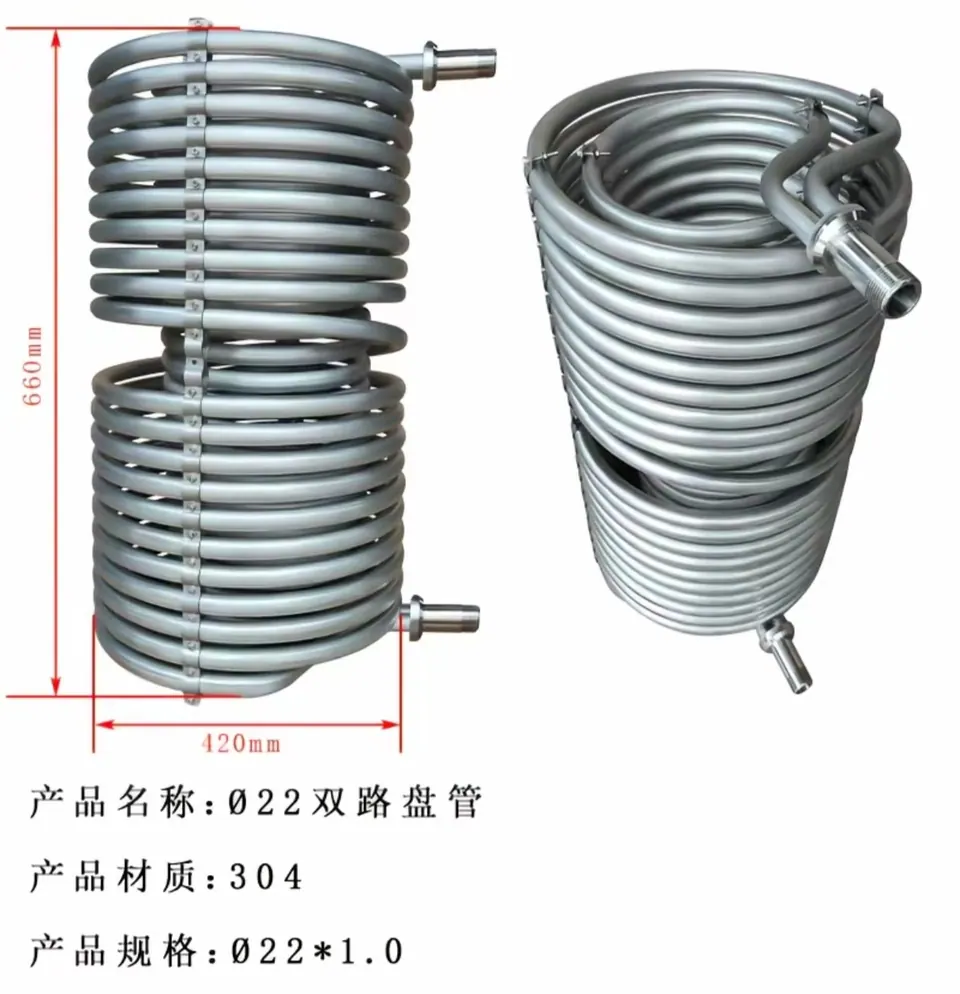
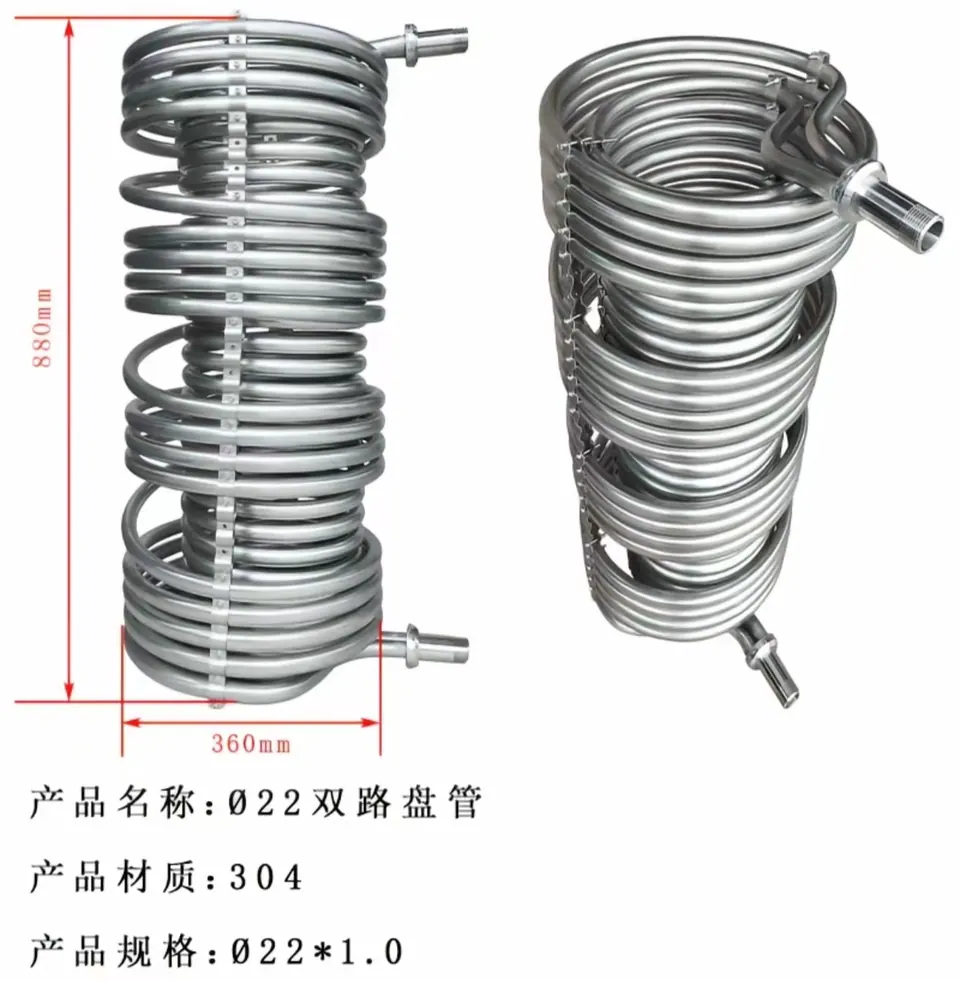
A multi-layer or nested coil places two or more concentric coils one inside the other, so more tube fits in the same height. A dual-circuit coil splits the flow into two parallel circuits, each with its own inlet and outlet or joined at shared headers, which shortens the path each stream travels and lowers the pressure drop compared with one circuit of the same total length. Each layer or circuit is defined by its own diameter, pitch and turns, plus the spacing between layers and the connection arrangement. The Uniinox catalog documents 304 stainless dual-circuit references P02 and P03; nested and other multi-circuit layouts are made to the customer's drawing.
Dimensions to specify
Mark these dimensions on a sketch or drawing. Say which ones control the fit and which are only for reference.
| Symbol | Dimension | Notes |
|---|---|---|
| D₁, D₂ | Outside diameter of each layer | Outer and inner layer, measured over the tube |
| g | Gap between layers | Clear space for the liquid and for cleaning |
| P, N | Pitch and turns of each layer | Layers may differ |
| — | Circuits | Series (one tube) or parallel (separate inlets or headers) |
| d × t | Tube outside diameter × wall | For example Ø22 × 1.0 mm |
Nested layers
A nested coil puts a smaller coil inside a larger one, so the same height holds more tube. The gap between the layers must leave room for the liquid to move around both layers and for the coil to be cleaned. The layers can be one continuous tube in series or separate circuits in parallel; state which on the drawing.
Dual and multiple circuits
Splitting the tube into two parallel circuits halves the flow in each circuit and halves the path length, so the pressure drop is lower than in one long circuit of the same total length. Circuits of equal length help the flow divide evenly. The catalog's dual-circuit references stack two circuits in one coil.
| Catalog reference | Layout | Tube OD × wall | Overall size |
|---|---|---|---|
| P02 | Dual-circuit | Ø22 × 1.0 mm | 880 H × 360 W mm |
| P03 | Dual-circuit | Ø22 × 1.0 mm | 660 H × 420 W mm |
Related: Custom coil catalog
Connections and headers
Show where every inlet and outlet leaves the coil, or whether the circuits join at shared headers. Mark which connection is the inlet for each circuit if the flow direction matters.
Related: Integrated assemblies with headers
Tube length
L = Σ Nₖ × √((π × (Dₖ − d))² + Pₖ²) + legs
Add the helical length of each layer or circuit k. Run the coil tube length calculator once for each layer and add the results. The result is the coil length only; connection ends and forming allowances add to the tube that is cut.
Production and catalog photos
What to send for a quotation
A dimensioned sketch is enough to start. Photos of the space or of an existing coil help if you do not have a drawing.
- Number of layers or circuits, each layer's diameter, pitch and turns, and the gap between layers
- Tube material, outside diameter and wall thickness
- Working medium inside the tube and the liquid or air outside it
- Operating temperatures and pressure, and any test requirement
- Connection ends, direction and length of the legs, and supports
- Quantity and any packing or cleanliness requirement
Frequently asked questions
Questions about multi-layer and dual-circuit coils
What is the difference between a nested coil and a dual-circuit coil?
A nested coil has two or more layers one inside the other. A dual-circuit coil splits the flow into two parallel paths; the circuits can be nested or stacked one above the other.
Why split a coil into two circuits?
Two parallel circuits each carry half the flow over half the length, so the pressure drop is lower than in one long circuit with the same total tube length.
How far apart should nested layers be?
There is no single value. It depends on the liquid, how it moves around the coil and how the coil is cleaned. State the minimum gap you need on the drawing.